Present
During my master’s in Industrial Design, my development shifted from merely becoming a well-rounded designer to defining a clear and distinctive design position. In my bachelor’s, I moved across different squads and project directions to work out where my interests actually were. During the master’s, that exploration narrowed. I became increasingly drawn to how design can help people engage with complex systems, artificial intelligence in particular, without reducing them to simple explanations.
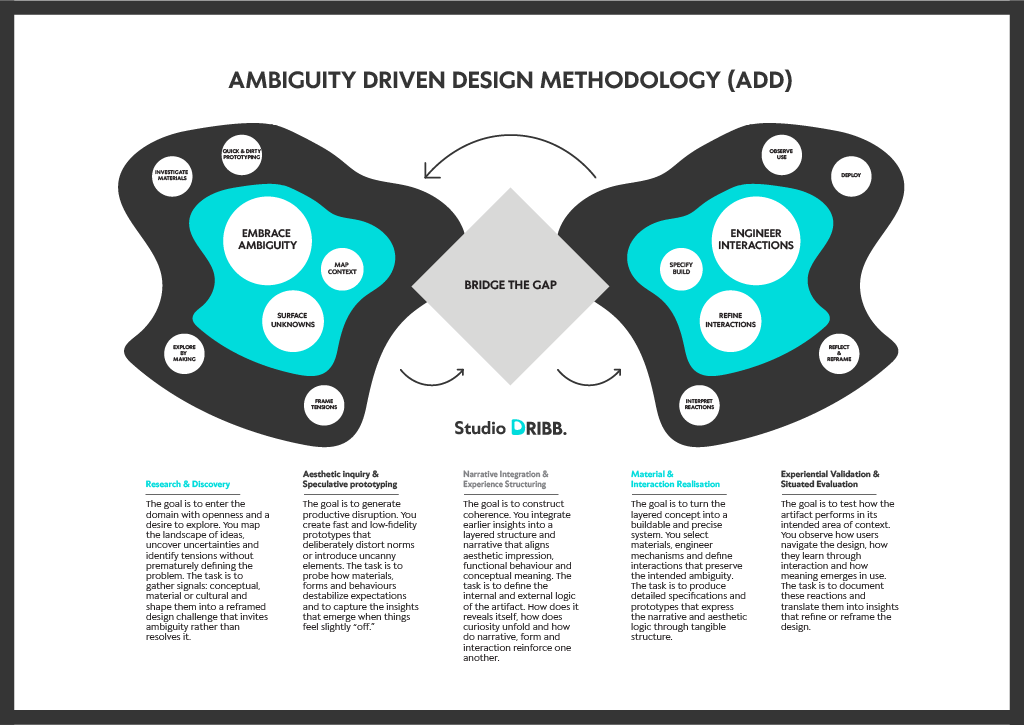
This direction led to Studio Dribb and my Ambiguity-Driven Design (ADD) methodology. Instead of treating ambiguity as a problem to solve, I started using it to invite curiosity, reflection and interpretation. All five expertise areas fed into this, but Creativity & Aesthetics and Business & Entrepreneurship became the strongest drivers of my professional identity.
Creativity & Aesthetics
Creativity & Aesthetics focuses on developing original ideas and shaping them into meaningful visual and experiential forms. It involves experimentation, critical evaluation and sensitivity to how a design is perceived.
This became the core of my master’s development. During my bachelor’s, aesthetics mainly helped me communicate ideas clearly. During my master’s, I started to treat aesthetics as part of the concept itself.
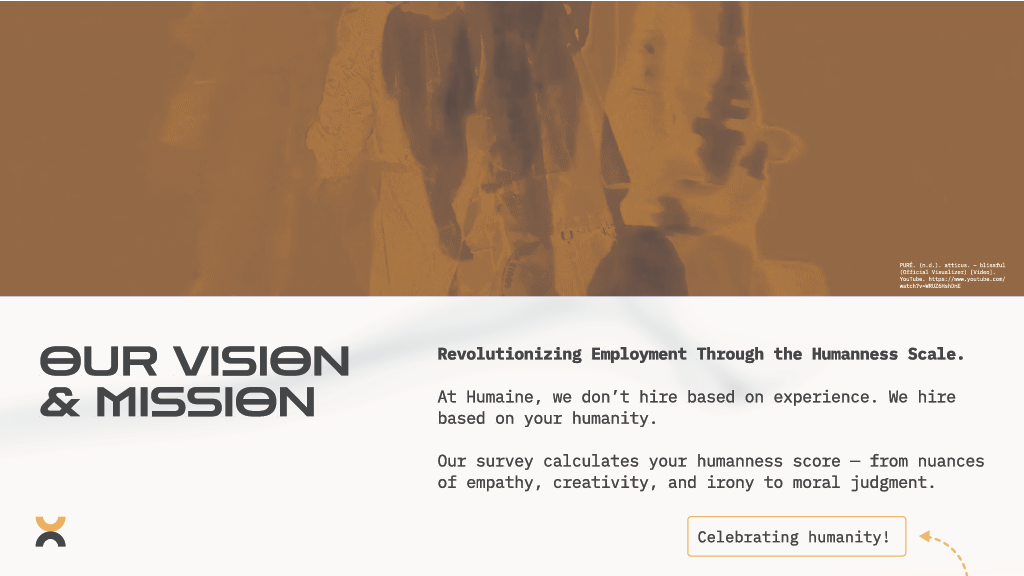
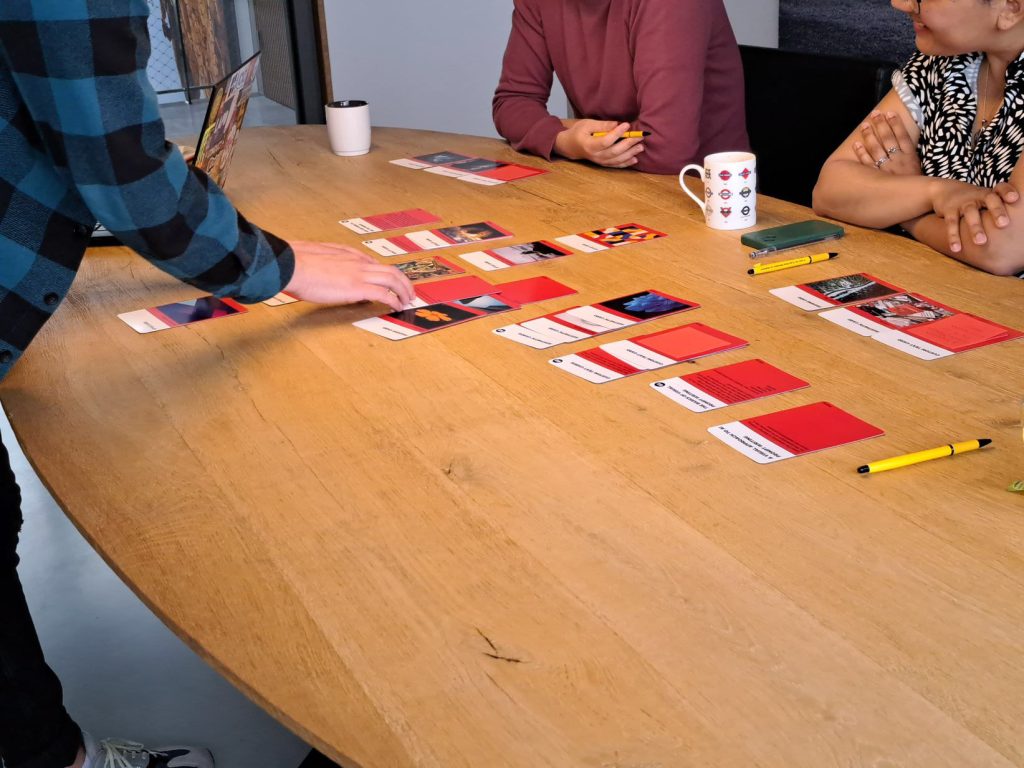
A clear example is Humaine, developed in Creativity and Aesthetics of Data and AI. Humaine was a speculative AI employment agency that assigned people to jobs based on a generated “humanity score.” The project looked like a polished technology platform, but its logic was intentionally uncomfortable. This contrast helped me understand how aesthetics can create tension and make people question systems that appear neutral or professional.
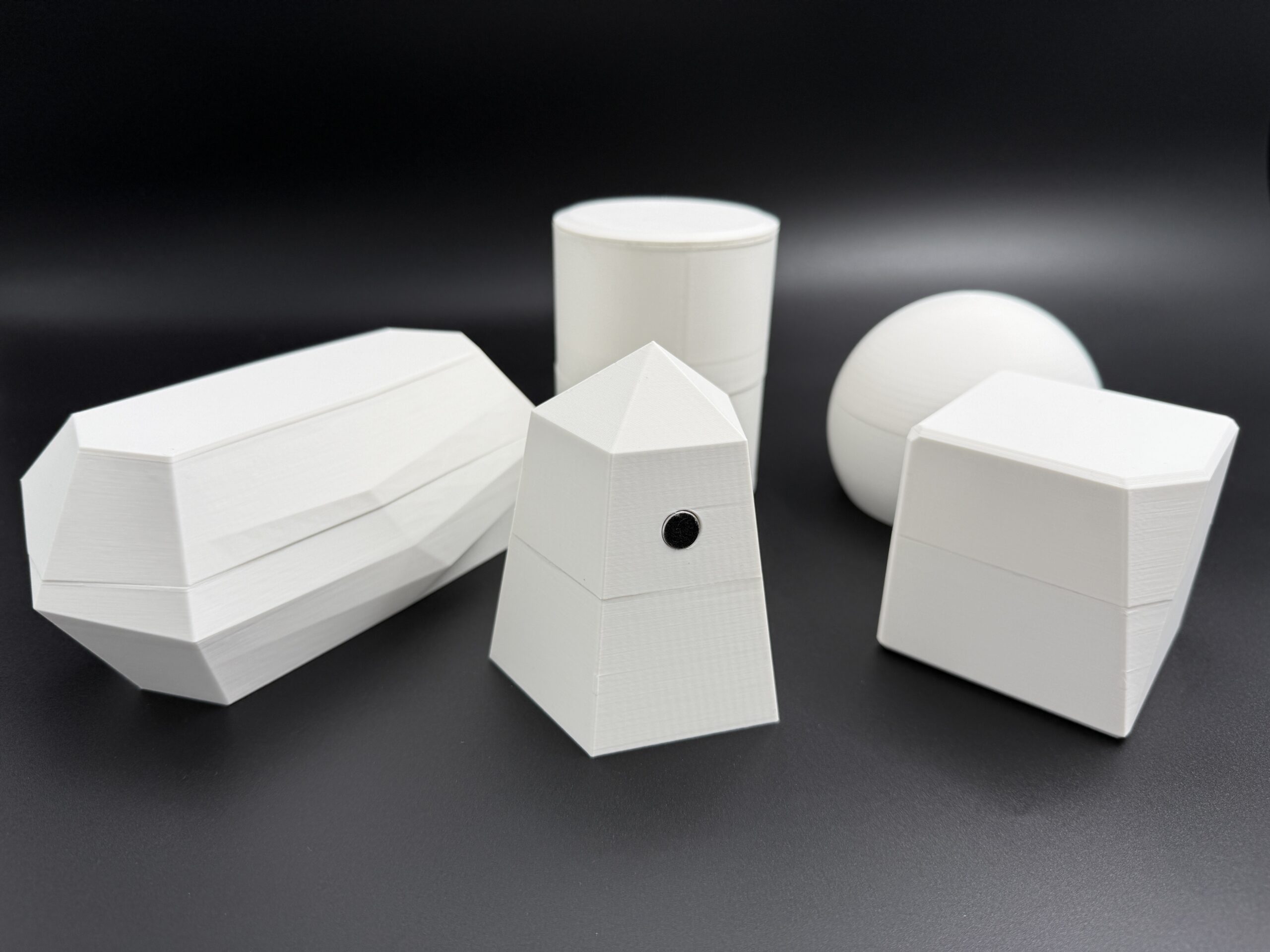
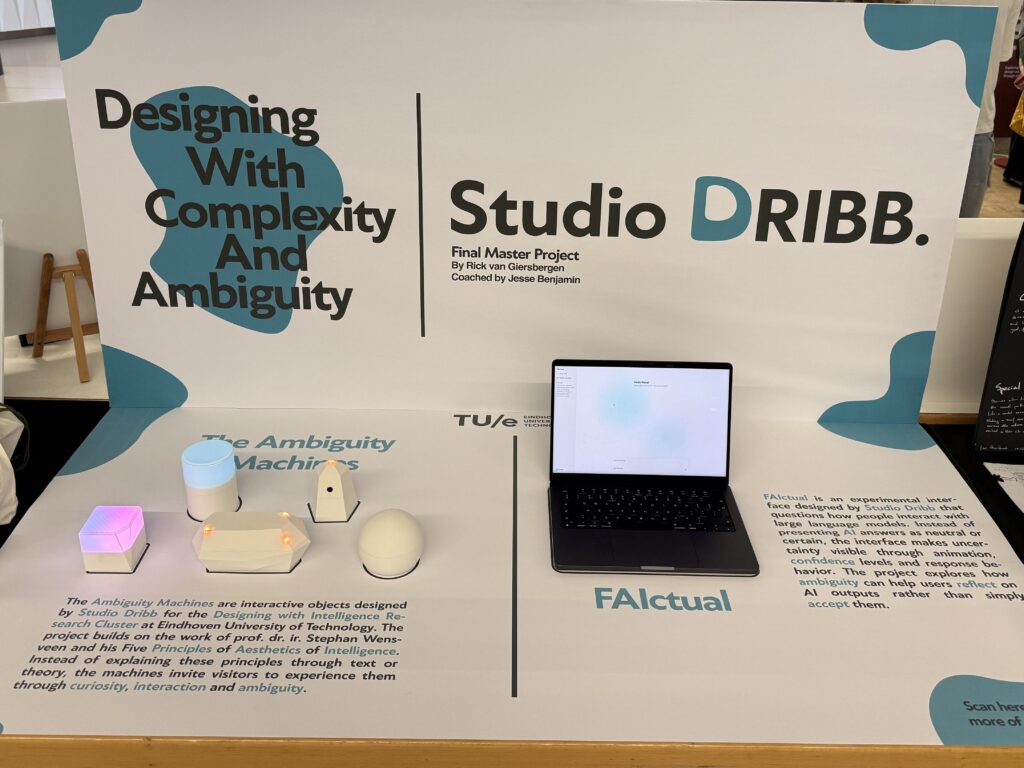
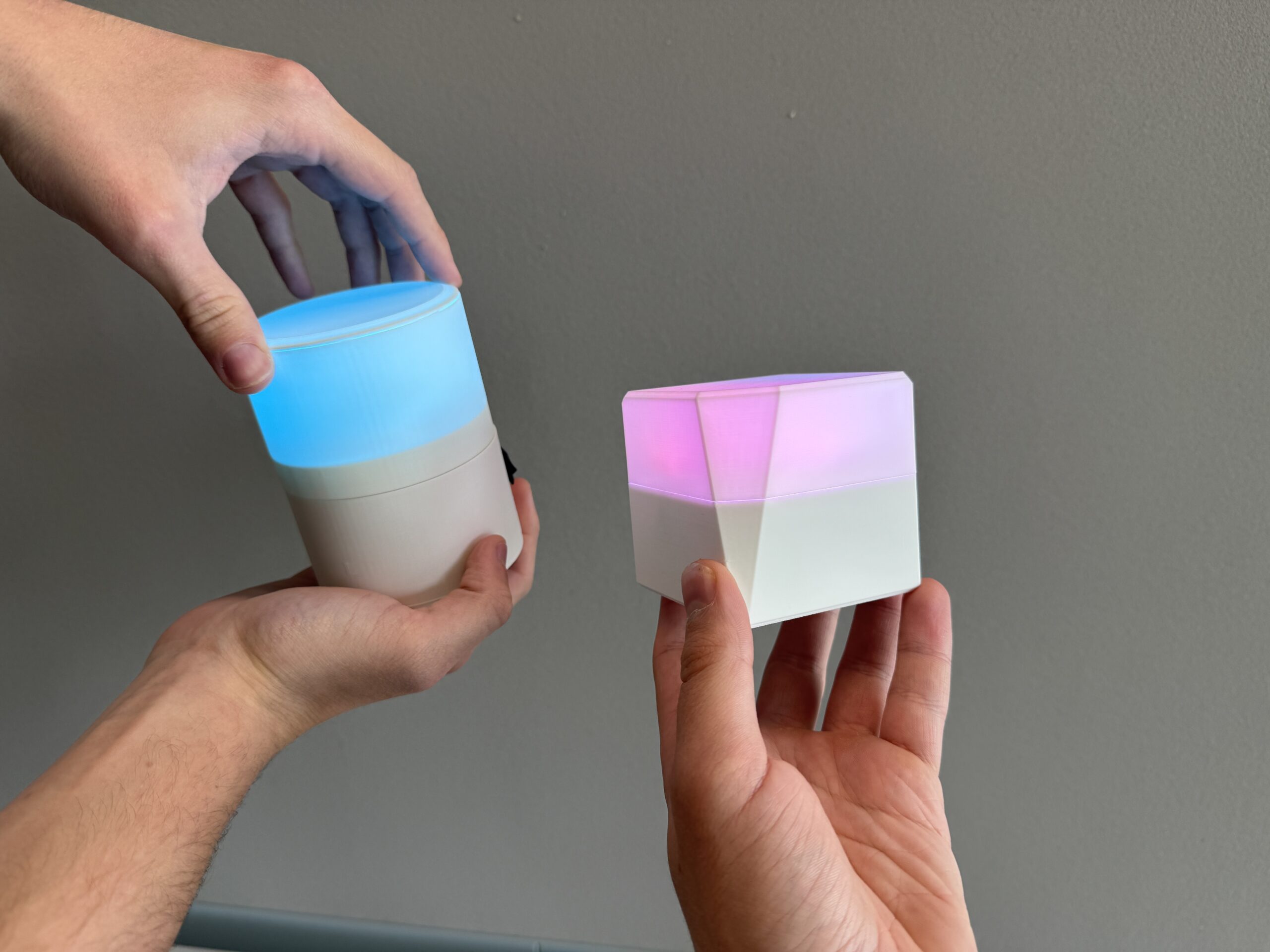
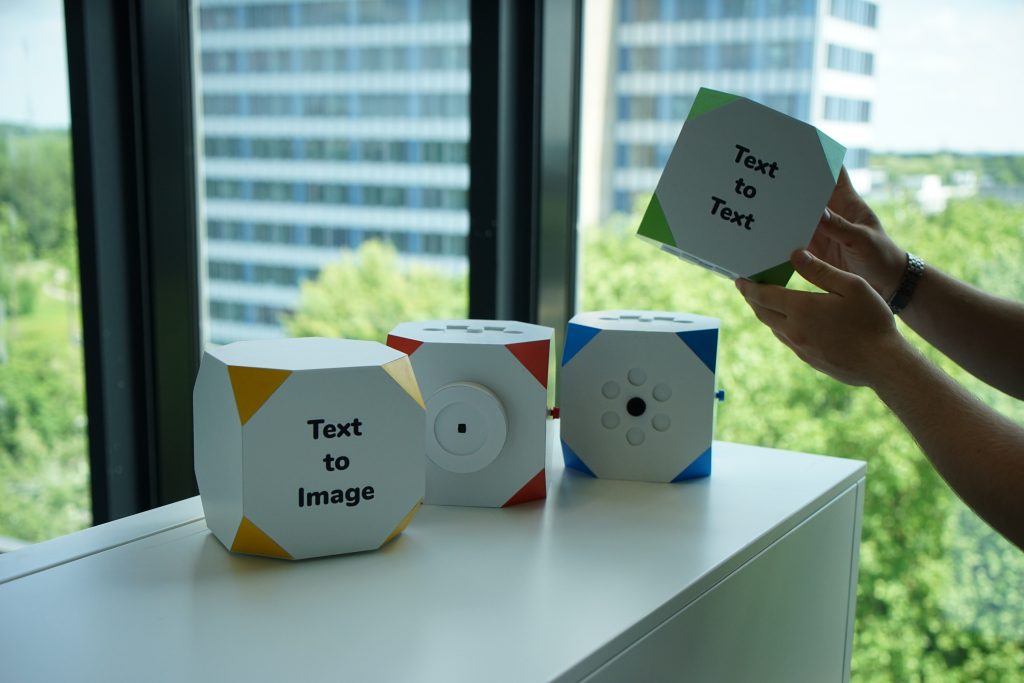
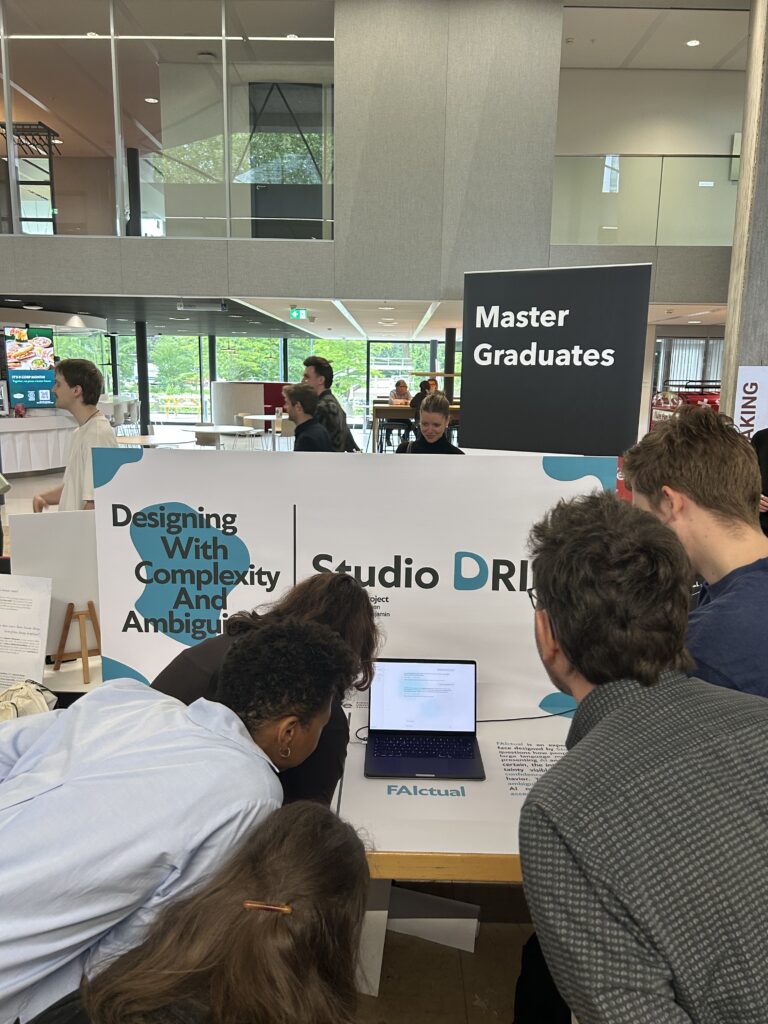
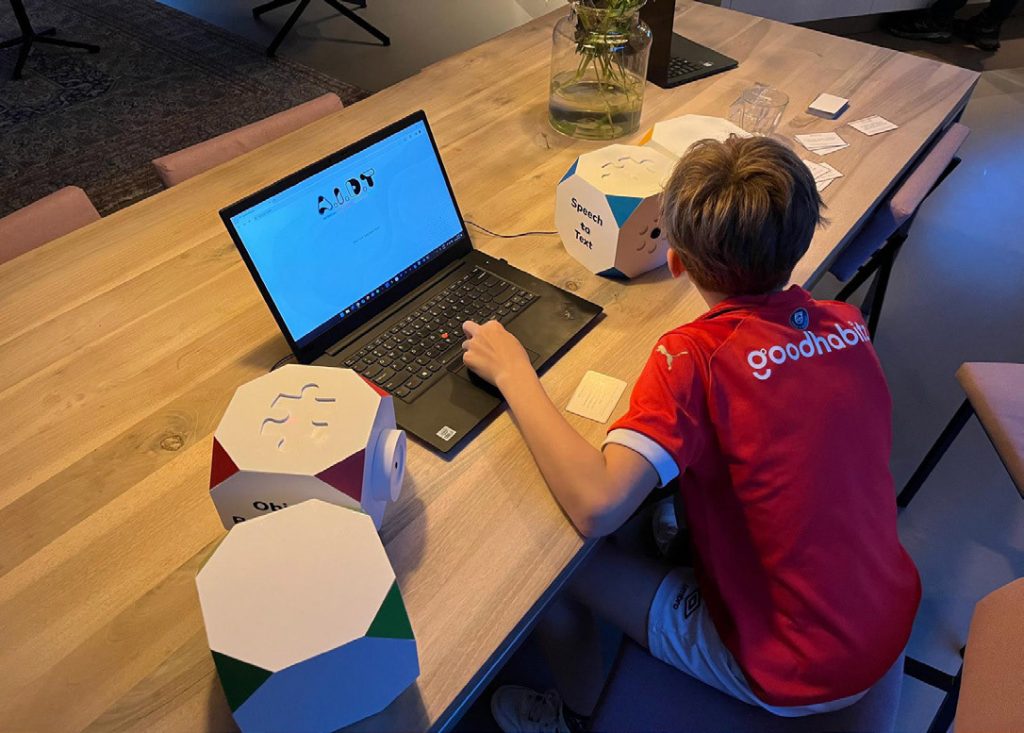
This thinking continued in my Final Master Project. The Ambiguity Machines do not explain Stephan Wensveen’s Five Principles of Intelligence through text. Instead, they let people experience these principles through objects, light, movement and interaction. FAIctual similarly explores how uncertainty in AI responses can be made visible. Through these projects, aesthetics became a way to keep complexity open.
Business & Entrepreneurship
Business & Entrepreneurship focuses on creating value beyond the design itself. It involves understanding stakeholders, markets, viability and how ideas can function outside an academic context.
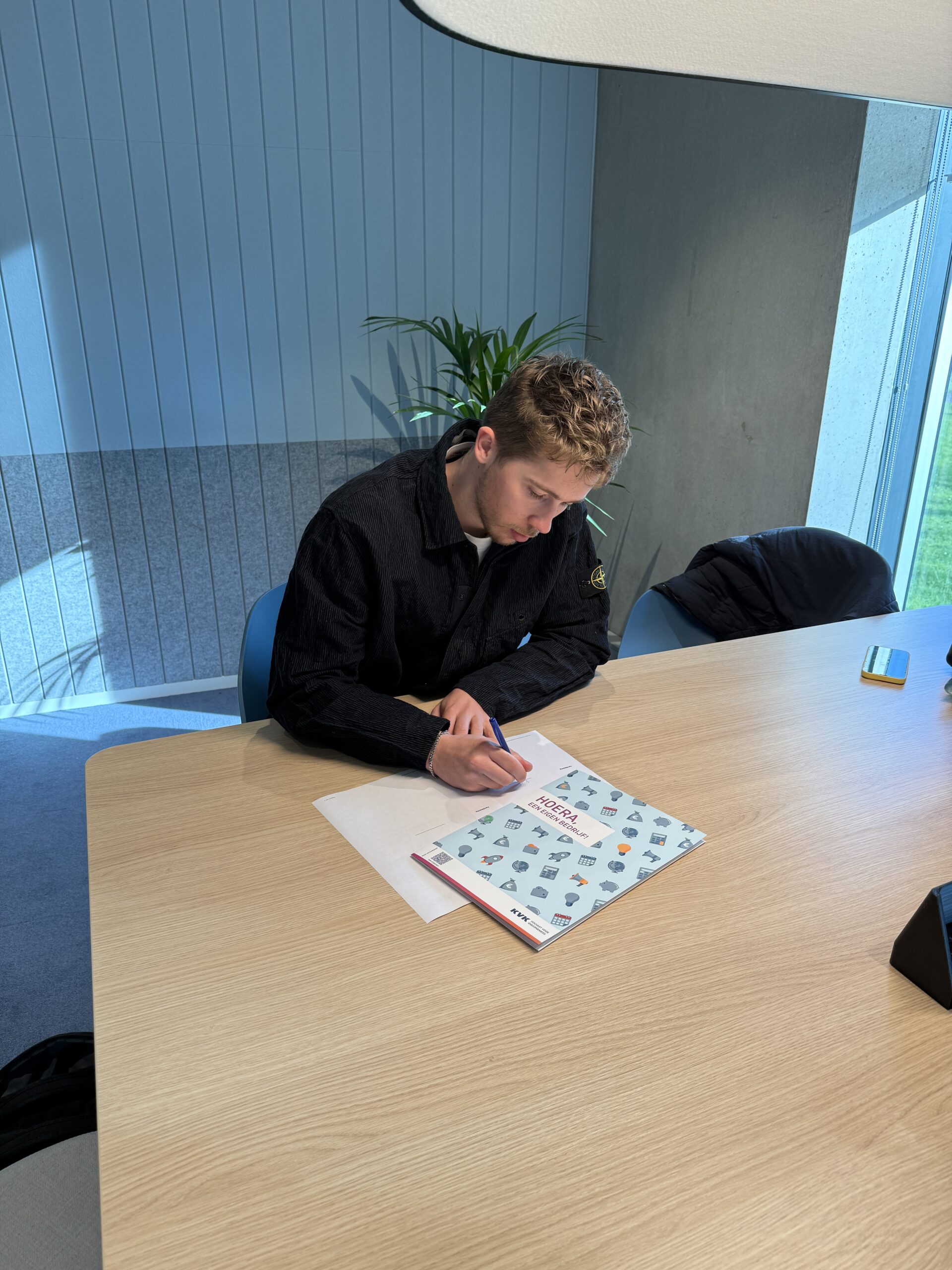
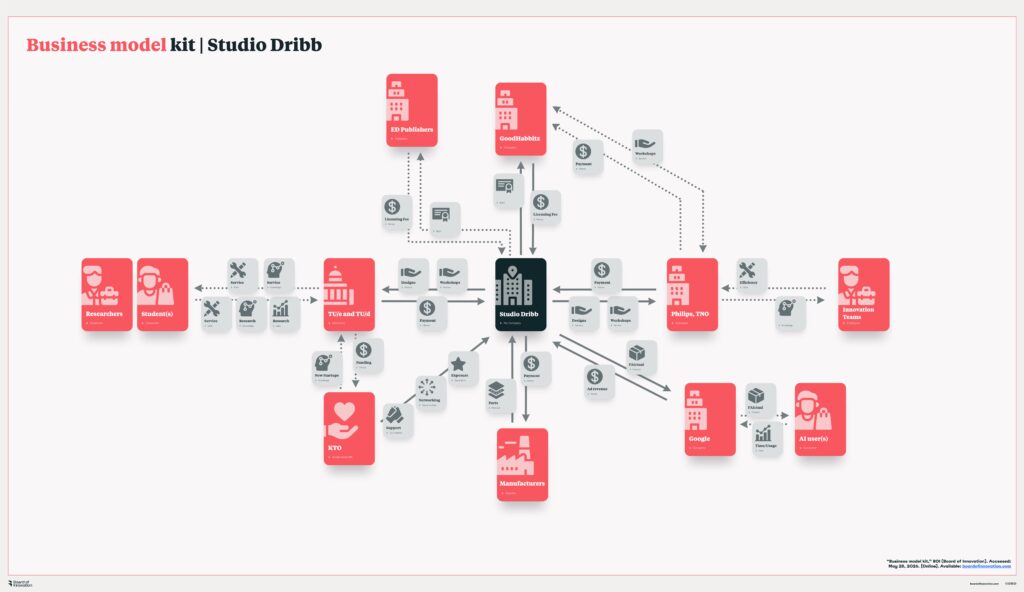
This area became concrete through Studio Dribb. Earlier, business thinking often appeared near the end of a project. During my master’s, it became part of the work from the start. Studio Dribb was not only a design identity, but a practice that needed to be tested.
Courses such as Design Entrepreneurship, Design for Social Innovation and Value-Based Leadership in Business Innovation helped me understand business models and value propositions. During my Final Master Project, I applied this knowledge through a client case with the Designing with Intelligence Research Cluster. I developed physical artefacts, a design dossier and a facilitation guide, which forced me to think about reuse and long-term value.
Validation conversations with TU Delft, Philips and The Gate showed that the approach has potential, but also that Studio Dribb still needs to prove itself beyond the academic context.
Technology & Realization
Technology & Realization is about translating ideas into working prototypes, drawing on materials, electronics, software and practical making.
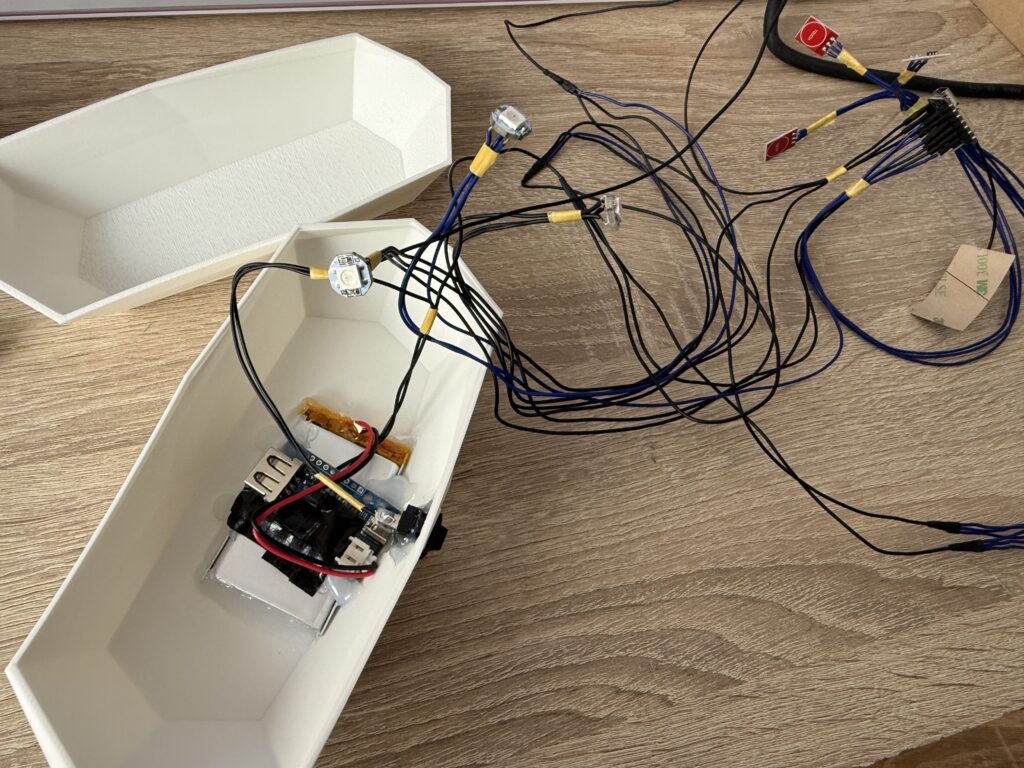
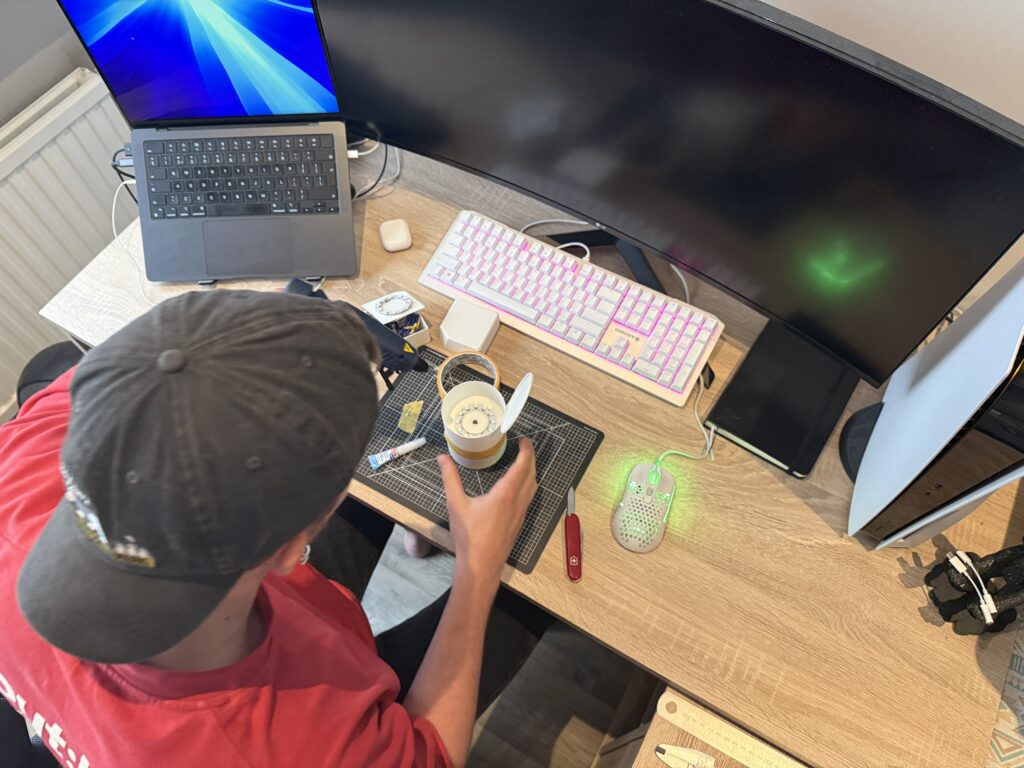
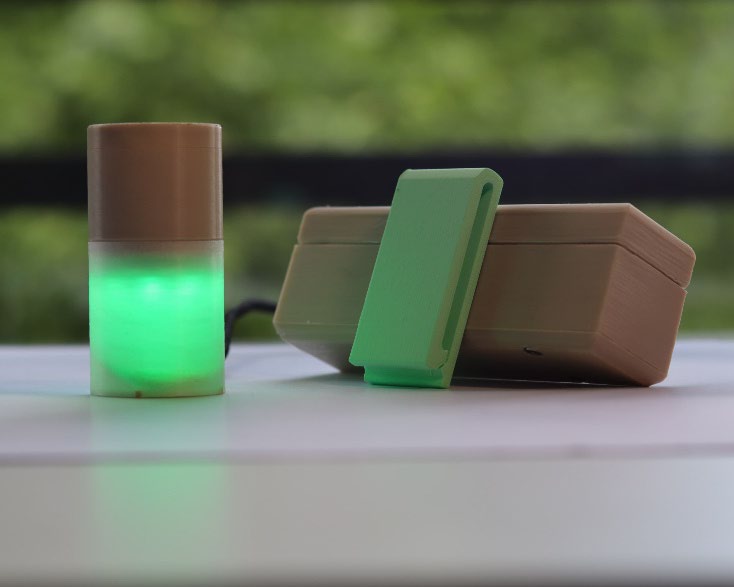
My growth in this area came mainly from two projects: the Ambiguity Machines and fAIctual. The Ambiguity Machines had me working with ESP32 microcontrollers, sensors, LED rings, wireless communication and 3D modelling. Because each device needed to behave in a specific way, the technical decisions I made fed straight into the user experience.
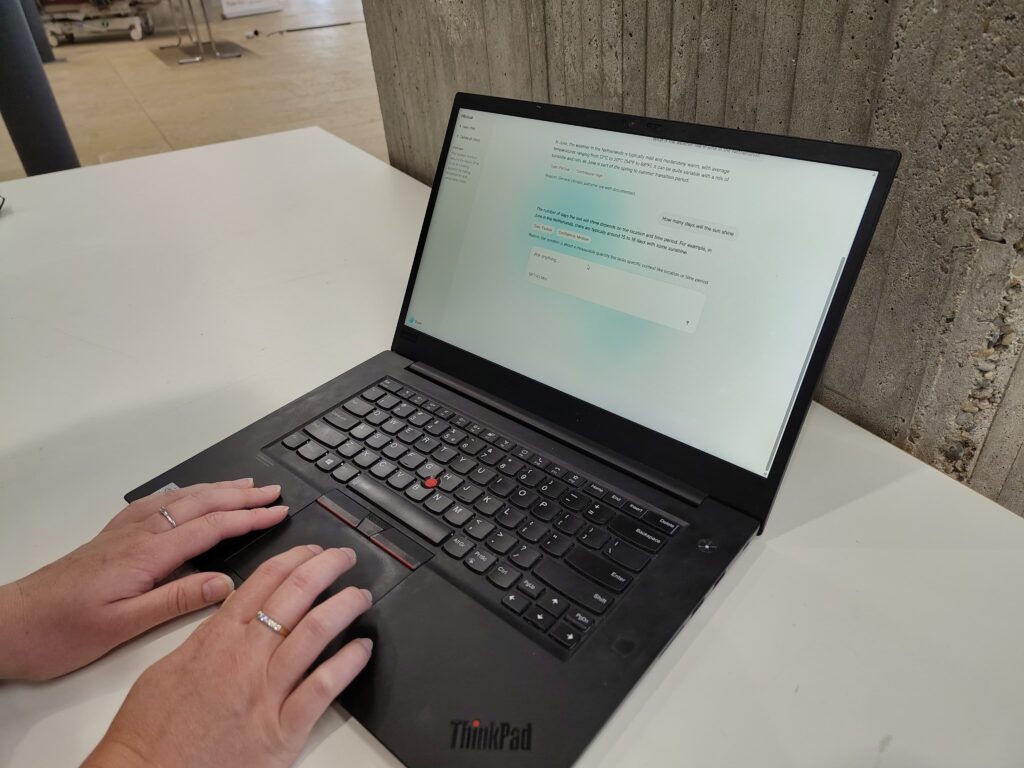
fAIctual developed the software side of my practice. I designed and built a web-based AI interface using HTML, CSS and JavaScript, which showed me how even small interface choices shape the way users read AI-generated information.
This area was reinforced further by courses such as Designing with Advanced AI and Intelligent Interactive Products, where I worked on machine learning, AI-generated audiobooks and a fall-detection device for elderly users.
User & Society
User & Society focuses on creating value for people while considering the wider social and ethical context of design.
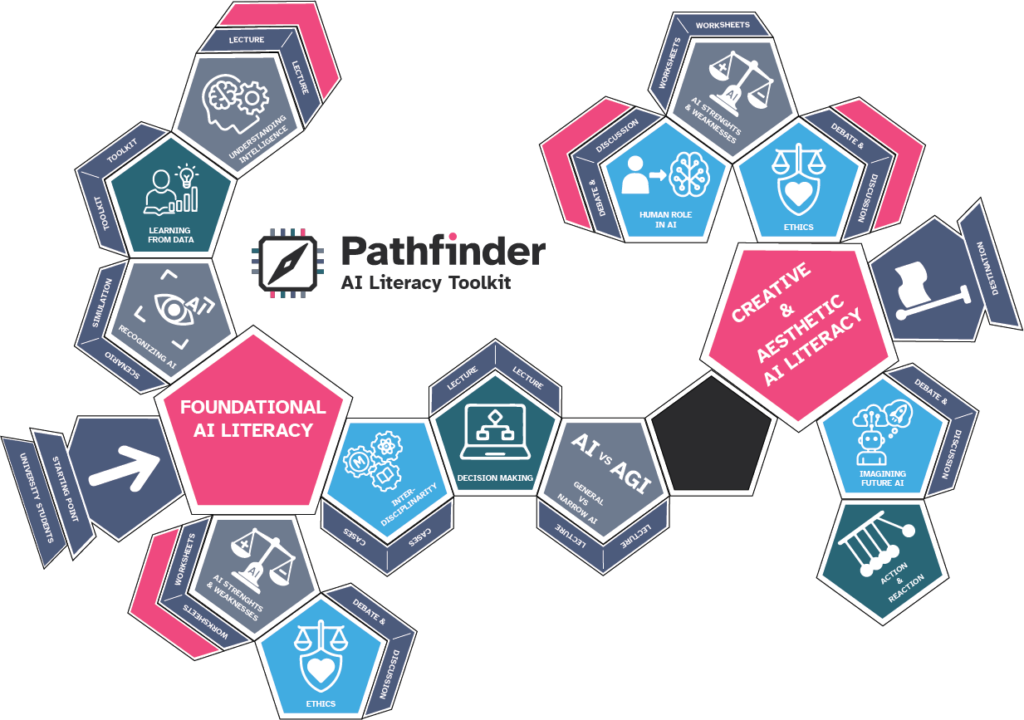
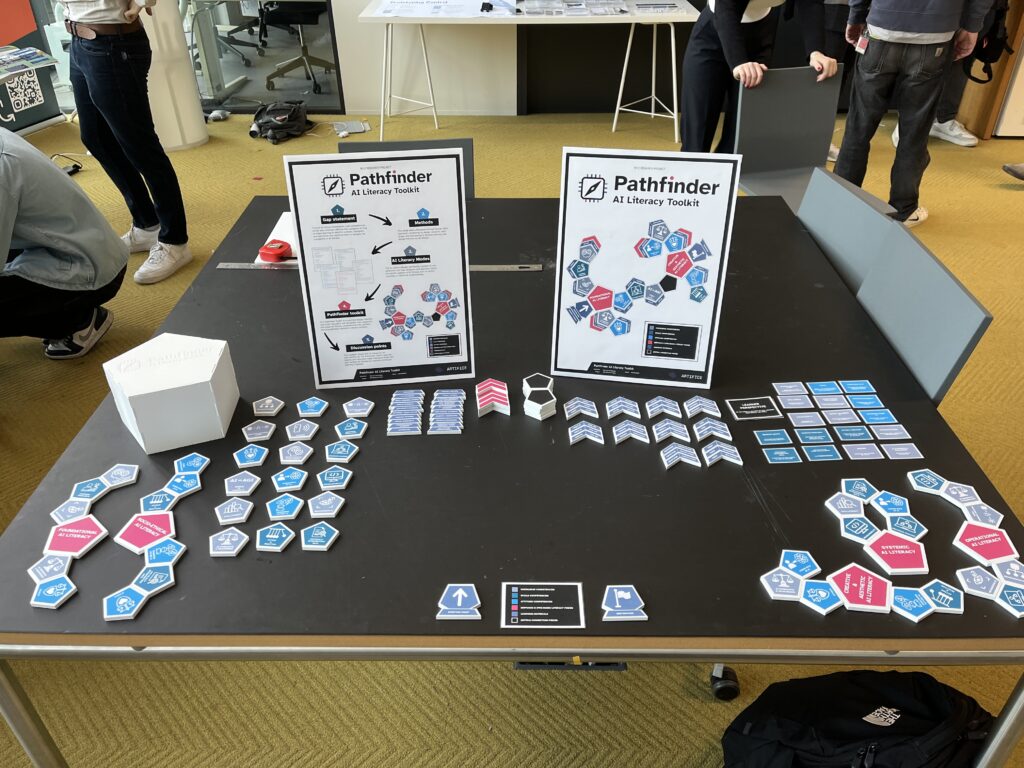
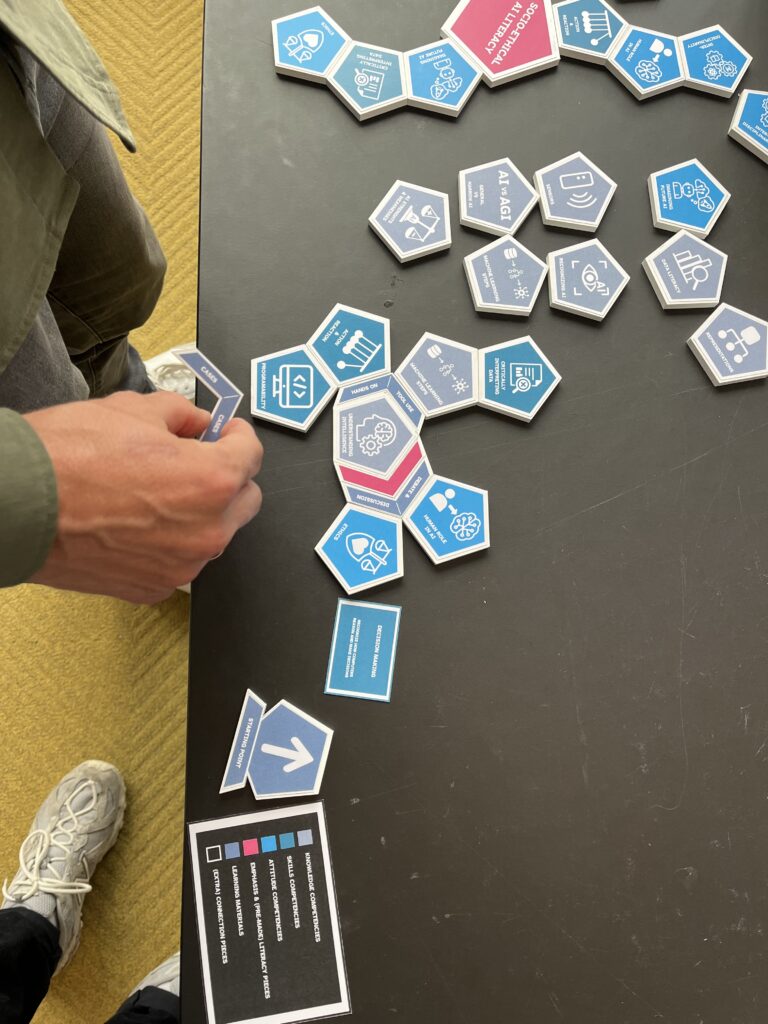
During my master’s, this area shifted from designing mainly for individual users toward engaging with broader questions around AI and society. Earlier projects such as the Pathfinder Toolkit and A.I.D.T. already focused on AI literacy. In my master’s, I became less interested in simply explaining AI and more interested in how people form their own interpretations of it.
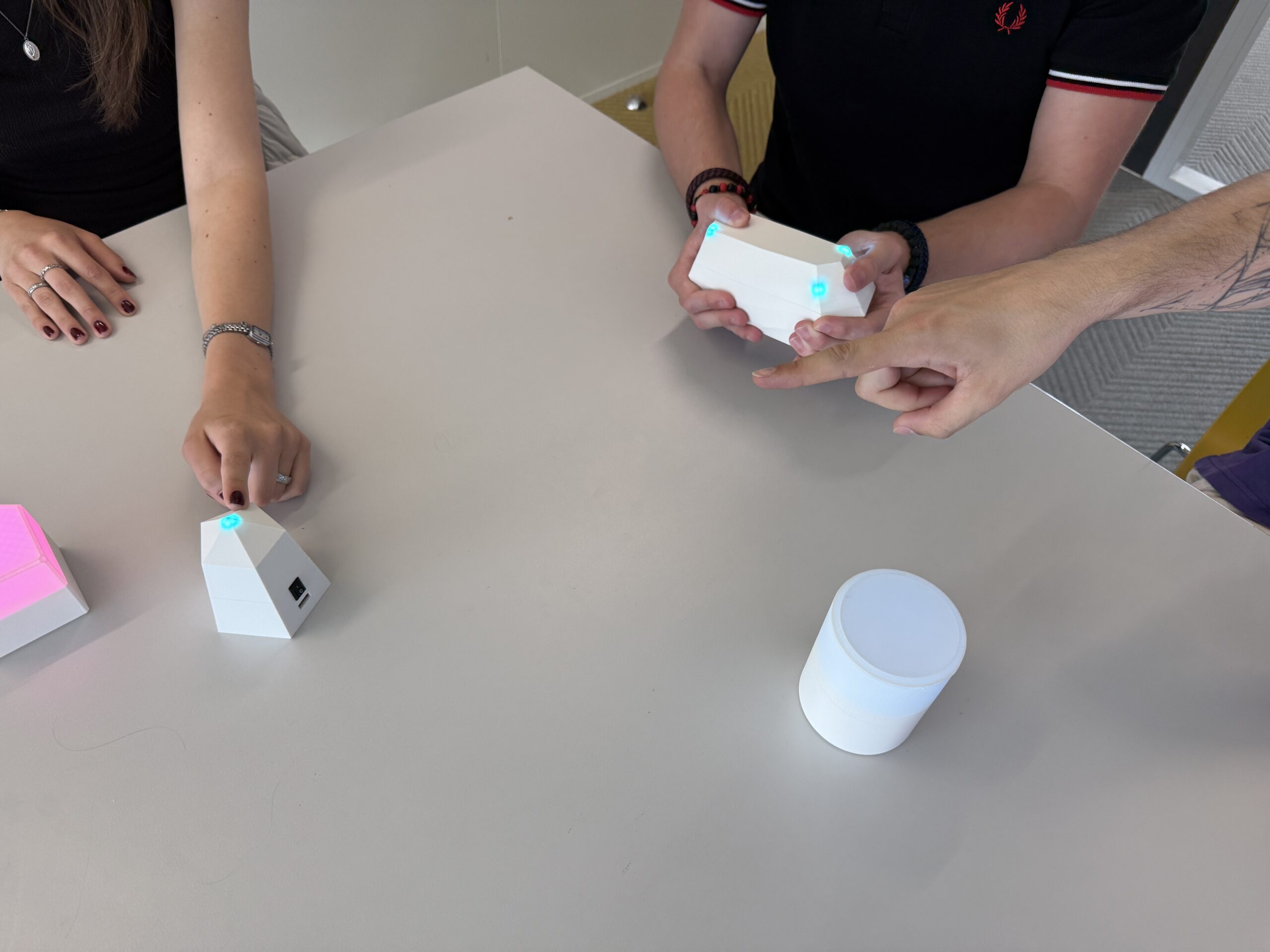
The Ambiguity Machines and FAIctual both address questions of trust, uncertainty and human-AI relationships. They do not give users a fixed lesson but create moments for reflection.
Math, Data & Computing
Math, Data & Computing concerns the use of data, logic and computation to make sense of complex problems. For me, this area gained relevance as my projects came to rely more heavily on AI and on research data. In my Final Master Project, for instance, I evaluated Studio Dribb and the Ambiguity Machines using a mix of methods: thematic analysis, interview coding, questionnaires, and observations drawn from workshops.
Two courses shaped my grounding here. Designing with Advanced AI and Creativity and Aesthetics of Data and AI deepened my understanding of machine learning, data bias and large language models. That understanding carried directly into projects such as Humaine and fAIctual, where AI functioned both as a technical system and as a subject I set out to critique.
Taken together, my master’s allowed me to connect the five expertise areas into a single, clearer design direction: designing for engagement with complexity through ambiguity, aesthetics and interaction.