Pathfinder Toolkit
Service
Master Design Research
Year
2024/2025
Expertise Area
User & Society | Creativity & Aesthetics
Design
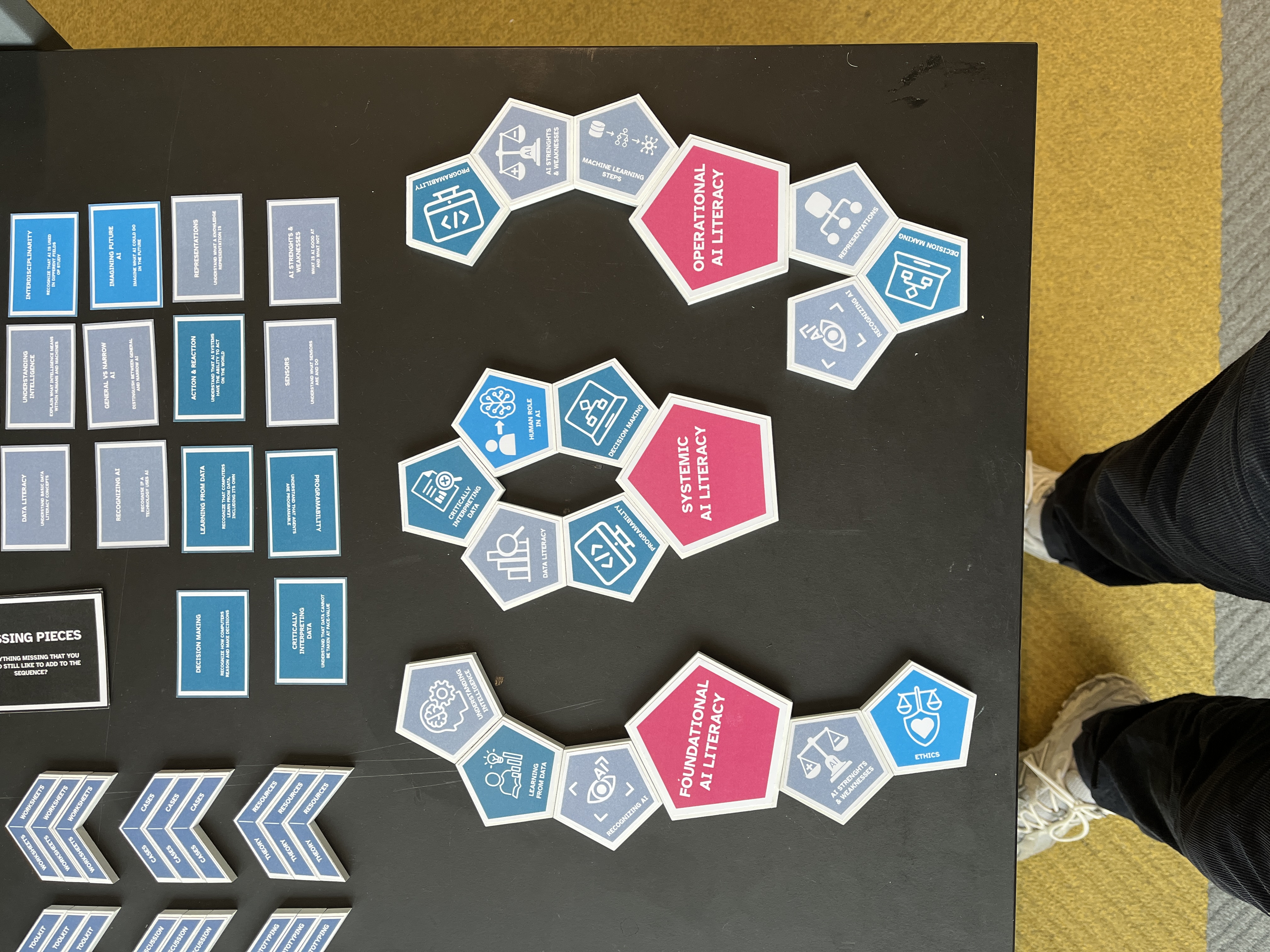
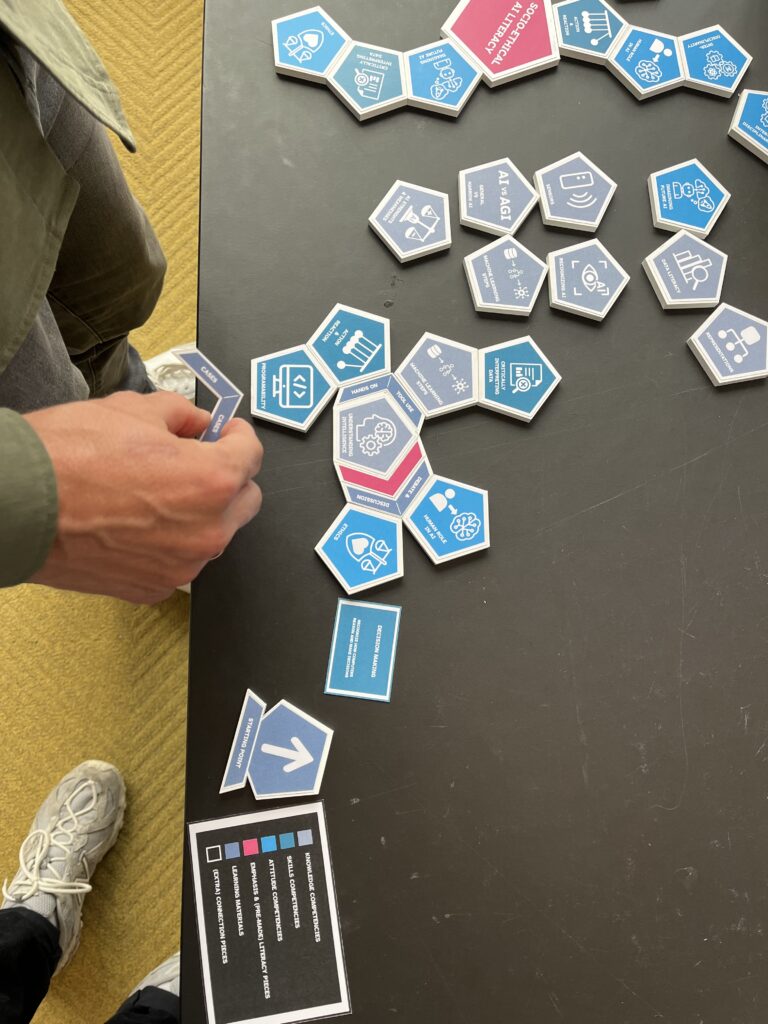
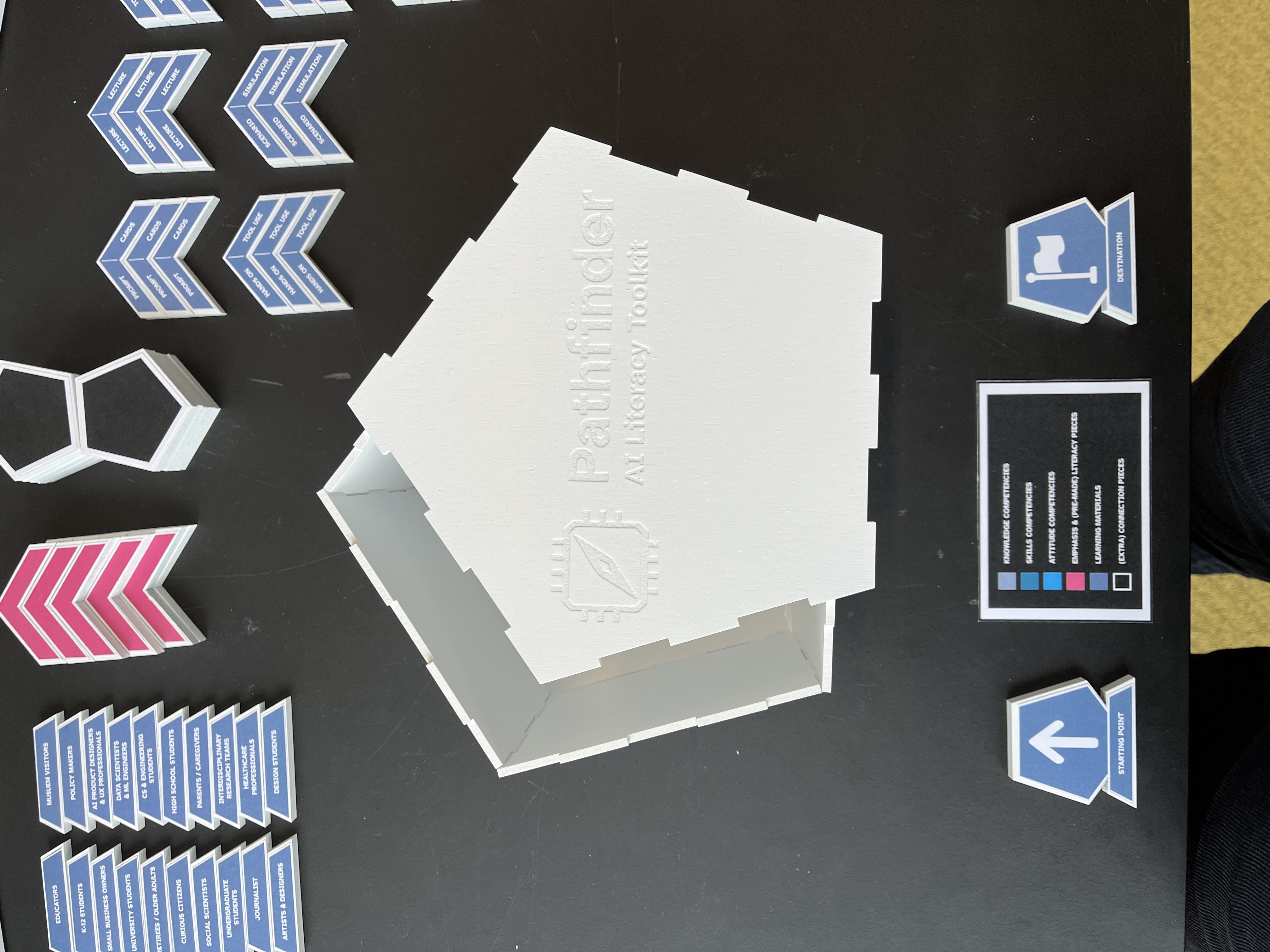
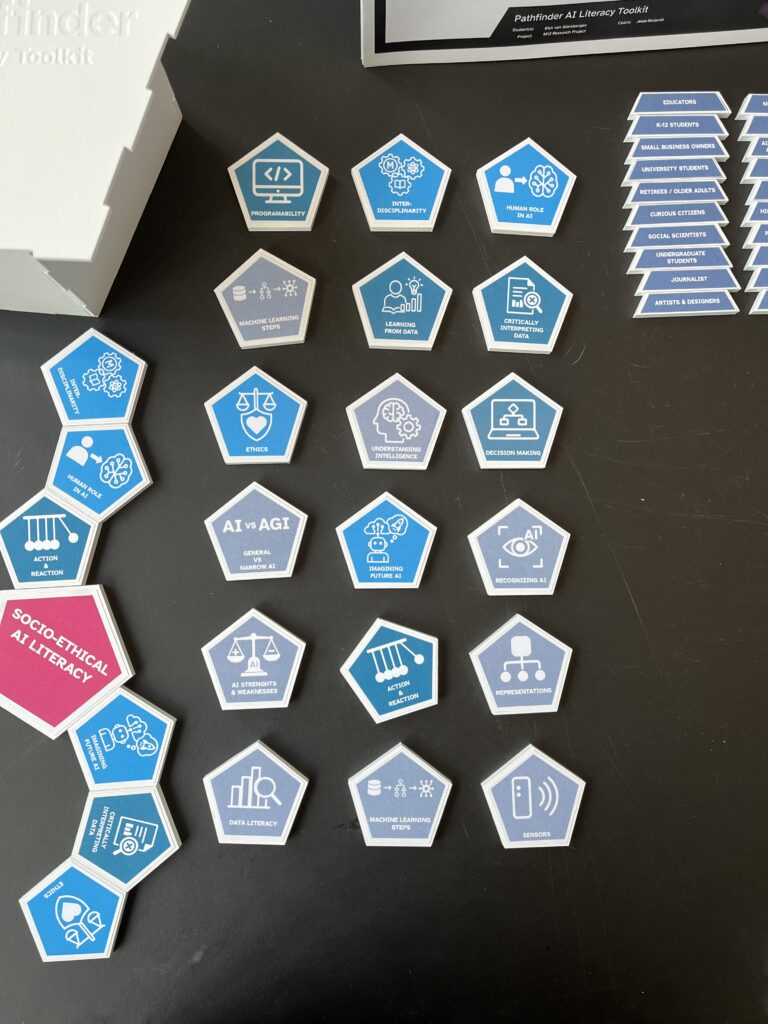
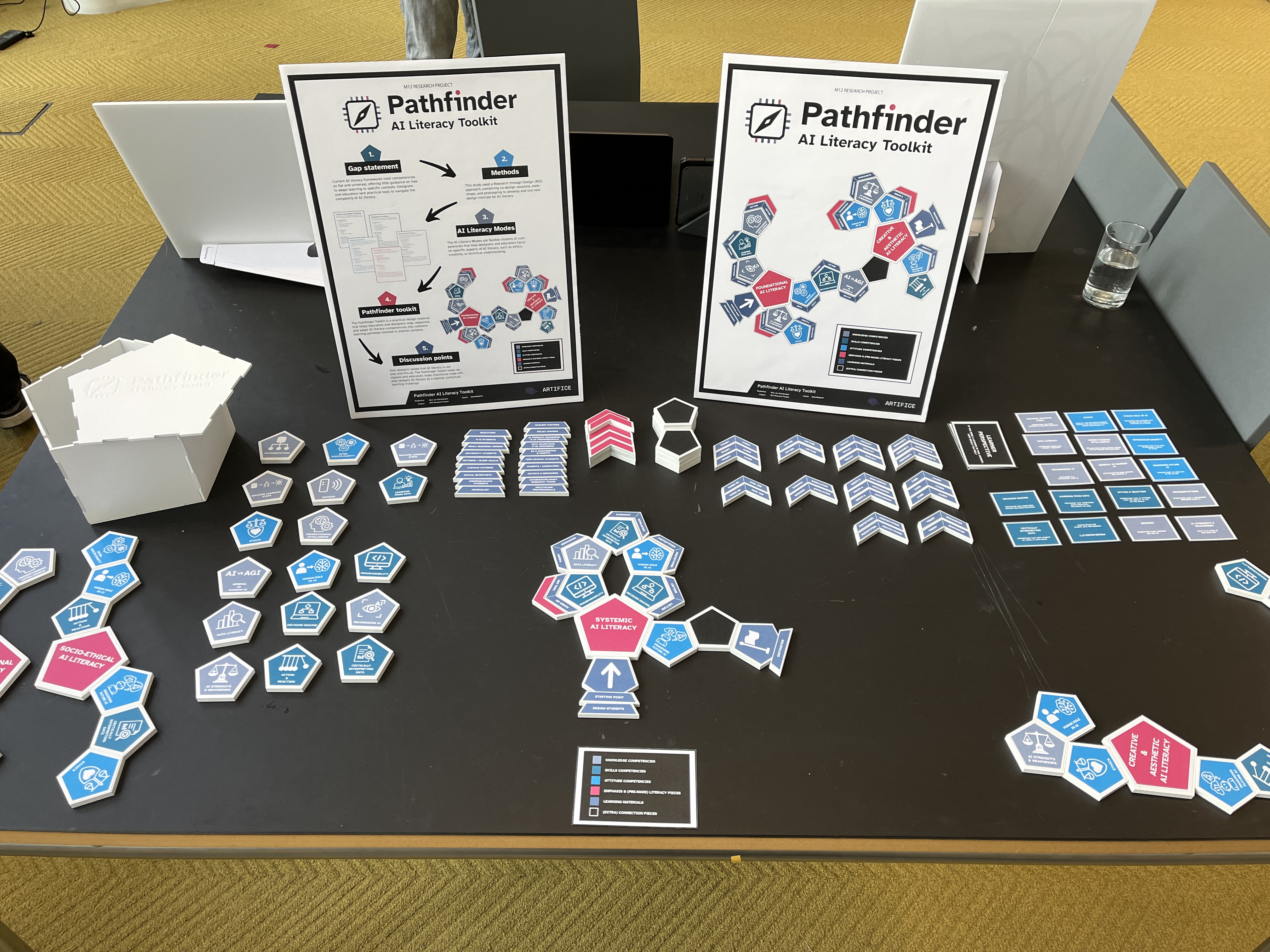
AI literacy is increasingly recognized as essential, yet existing frameworks often treat it as flat and universal, offering little guidance on how to tailor content to diverse learners. This research explores how AI literacy can be made more contextual and actionable through the design of ‘’AI literacy modes”, flexible clusters of competencies shaped by learner goals and roles. Using a Research through Design (RtD) approach, these modes were co-designed with students, refined with educators and operationalized into the Pathfinder Toolkit. The Pathfinder toolkit enables educators and designers to build AI literacy pathways by arranging modular blocks representing competencies, learning materials, and literacy modes. Based on insights from participatory sessions and informal testing, the paper discusses how the modes supported reflection and planning as well as how the toolkit’s visual and modular format helped externalize design choices. This work shows how AI literacy design can become more adaptive, situated and practical.
Findings across the study emphasized the importance of contextualizing AI literacy, the value of clustering competencies and the need for actionable, adaptable design tools. Educators found the modes conceptually useful and appreciated the toolkit’s visual, modular structure, though also expressed a need for greater scaffolding and customizability. This work contributes to both AI literacy and design education by offering a new lens for structuring literacy content and a practical tool for doing so. Whilst preliminary, the results point to new opportunities for embedding critical, creative and technical AI literacy in diverse learning contexts. Future work is needed to further develop, deploy and study these tools in both educational and professional settings.