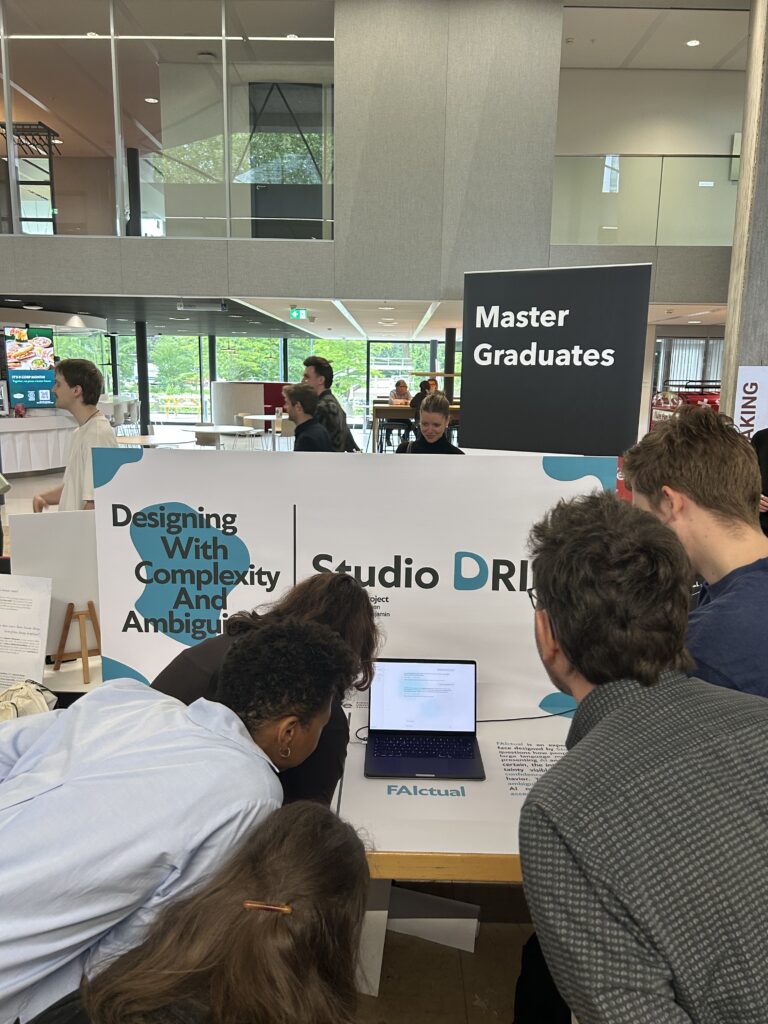
Studio Dribb
Service
Final Master Project
Year
2025/2026
Expertise Area
Creativity & Aesthetics | Business & entrepreneurship | User & Society | Math, Data and Computing | Technology and Realization
Design
The goal of my Final Master Project was not to design a single product, but to establish Studio Dribb as a design practice that explores how ambiguity, curiosity and aesthetics can become productive forces in interaction design. The project responds to a growing tension within contemporary design, where efficiency, clarity and optimization often overshadow exploration and reflection, particularly in the context of artificial intelligence.
To support this vision, I developed Ambiguity Driven Design (ADD), a design methodology that treats ambiguity as a valuable design material rather than a problem to eliminate. Through a series of research-through-design explorations, ADD was built around five iterative phases that encourage designers to embrace uncertainty, speculative making, narrative development and experiential validation. Instead of guiding users directly toward answers, the methodology aims to create experiences that invite curiosity and reward exploration.
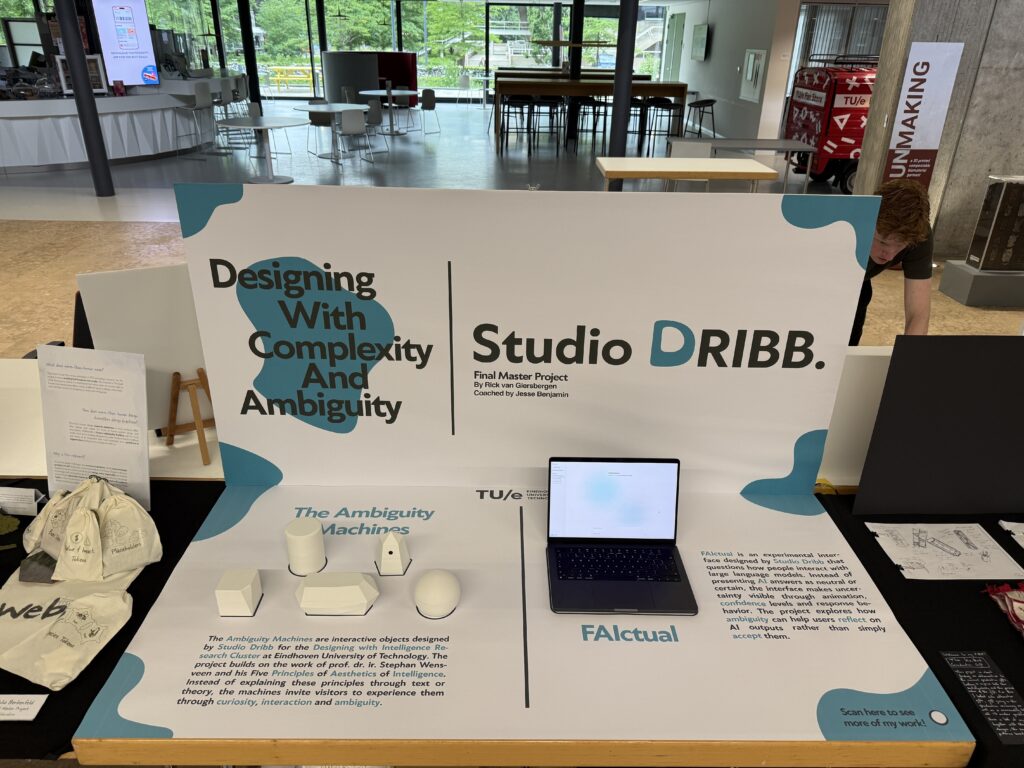
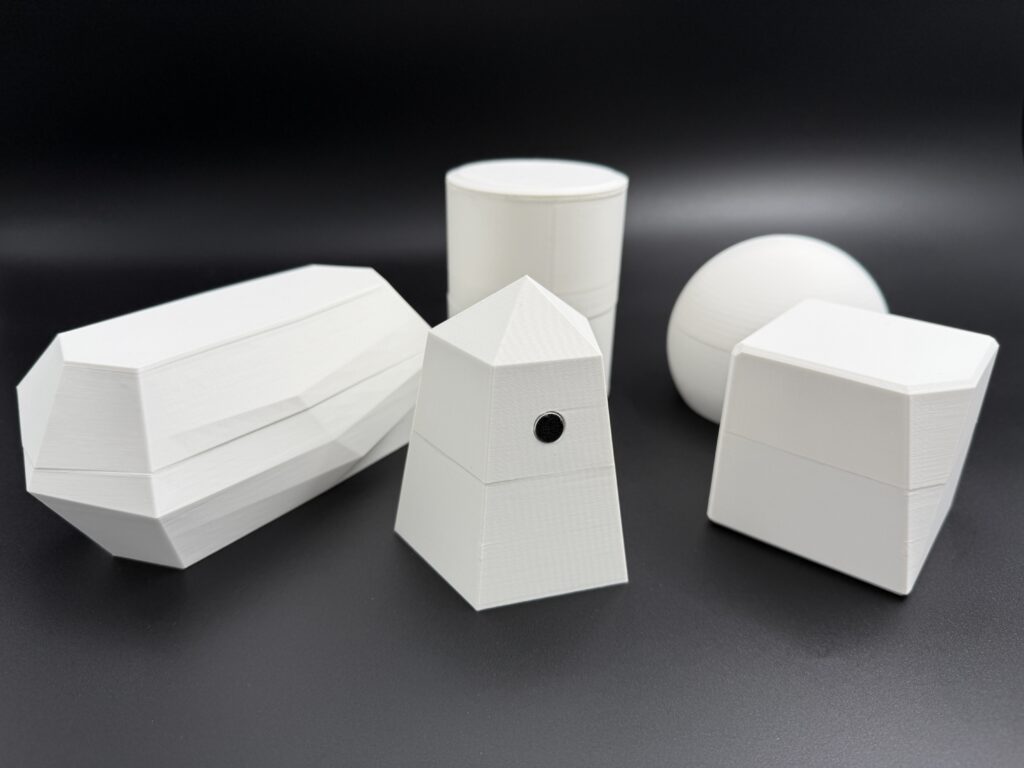
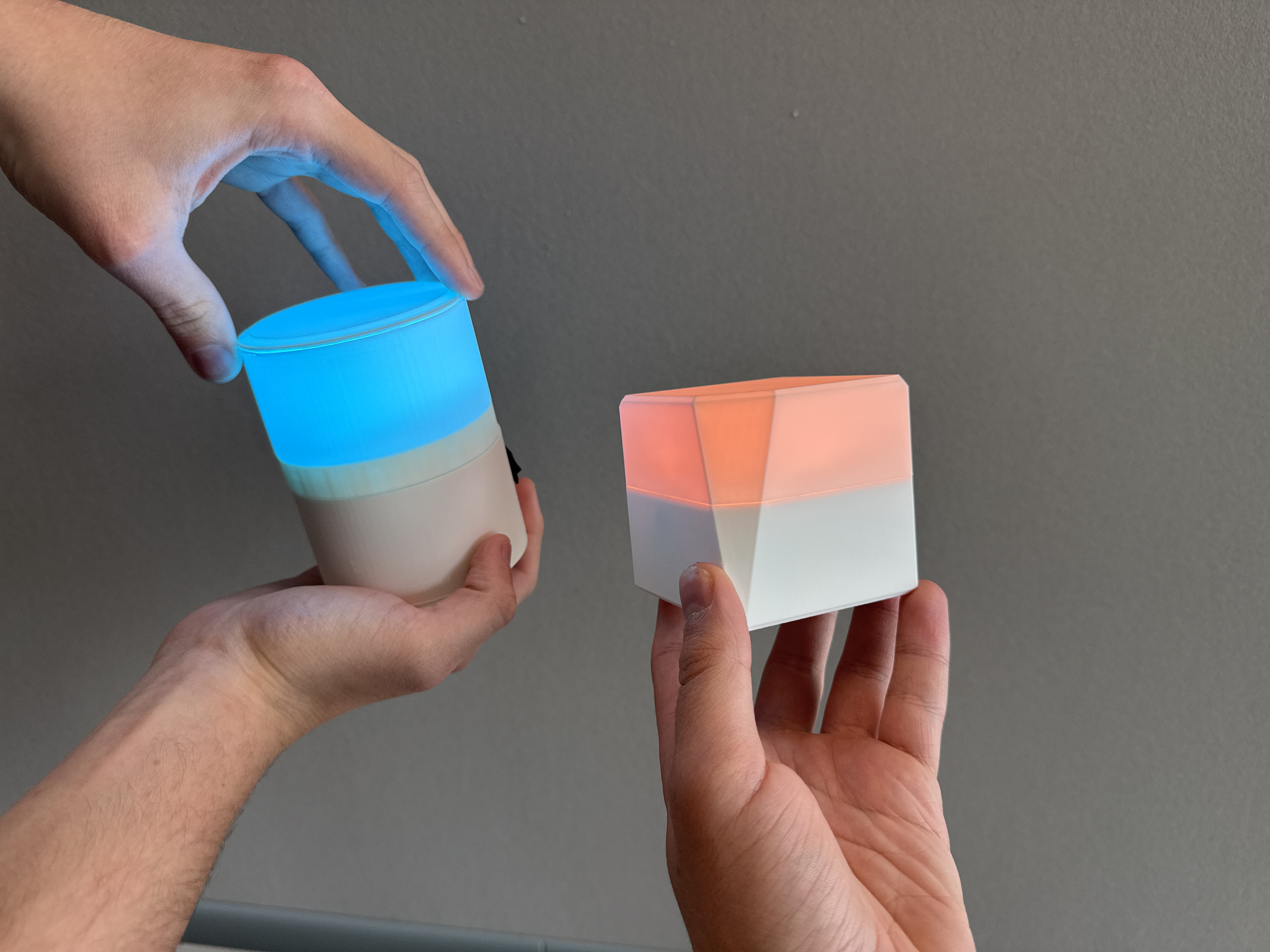
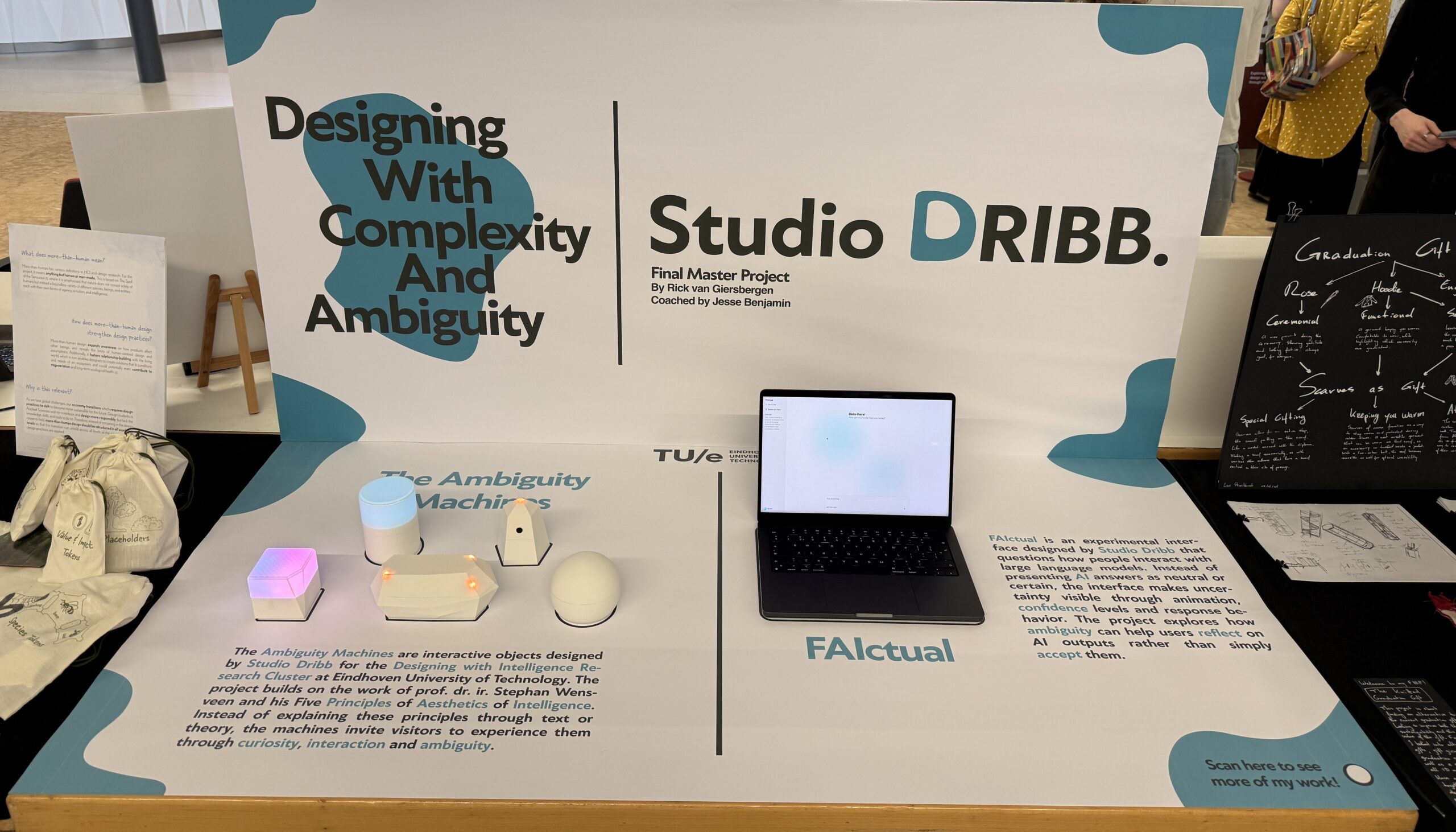
The methodology was subsequently applied in a client case for the Designing with Intelligence research cluster at Eindhoven University of Technology. The objective was to develop a tangible learning tool that helps students engage with Stephan Wensveen’s five principles of the Aesthetics of Intelligence: uncertainty, instability, agency, intentionality and emergence. Rather than explaining these concepts through lectures or written material, I designed a collection of interactive artifacts called the Ambiguity Machines. Each machine embodies one or more of these principles through unusual interactions, aesthetic provocation and intentional ambiguity. By inviting experimentation instead of providing explicit instructions, the Ambiguity Machines encourage students to discover, discuss and interpret the principles themselves, transforming abstract theory into an embodied and memorable learning experience.
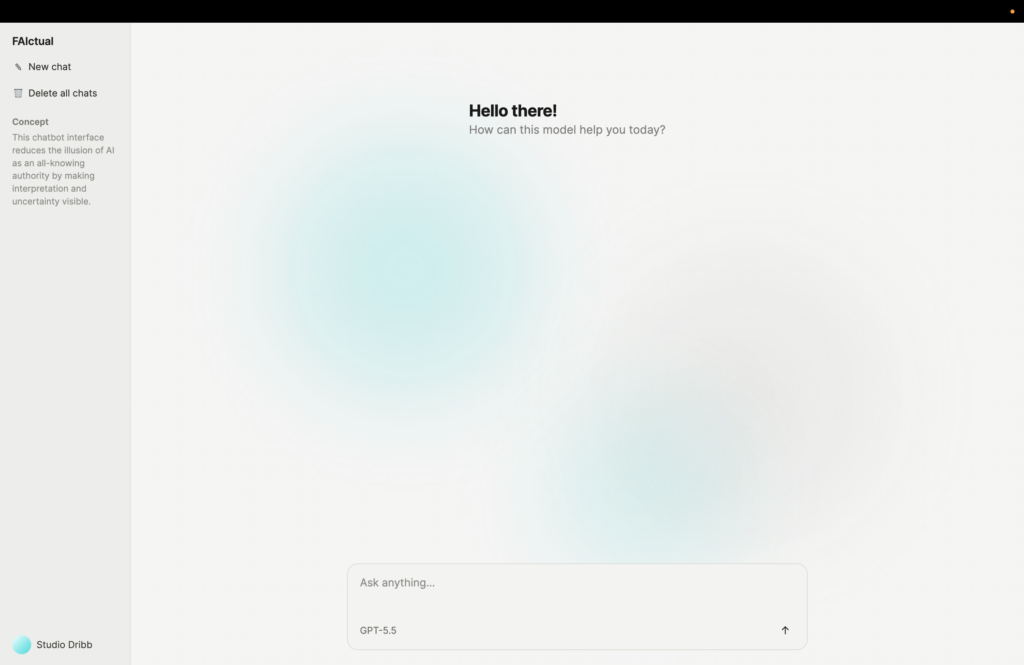
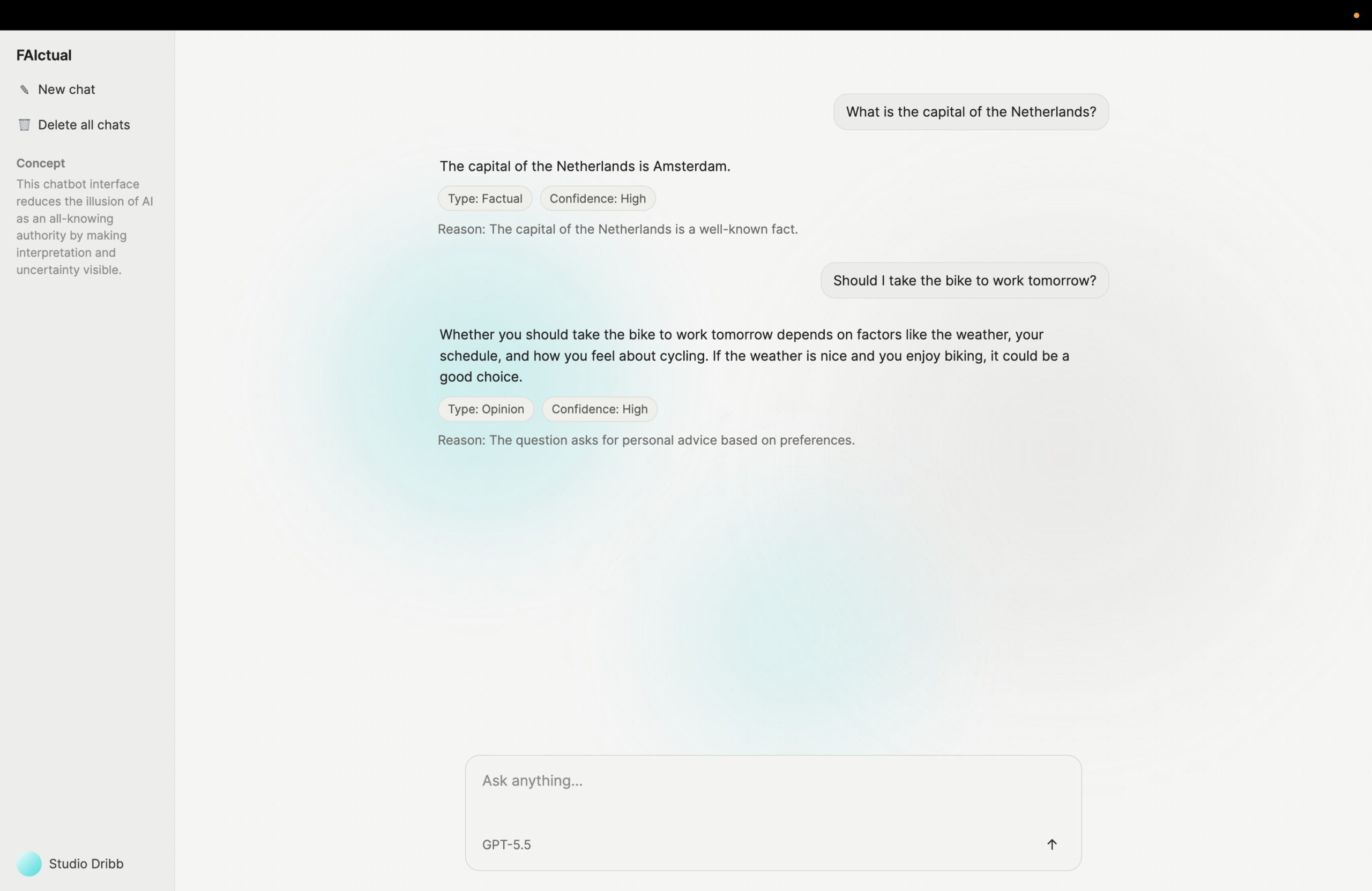
The project culminated in FAIctual, the first independent product developed under Studio Dribb. FAIctuel is a speculative AI-powered newspaper that deliberately blurs the boundary between fact and fiction. Rather than presenting information as unquestionably true, it encourages readers to question sources, reflect on AI-generated content and actively construct their own understanding. In doing so, FAIctuel demonstrates how ambiguity can be intentionally designed to cultivate critical thinking instead of passive consumption. Together, Studio Dribb, ADD, the Ambiguity Machines and FAIctuel present a coherent design vision in which curiosity, aesthetics and ambiguity become catalysts for more thoughtful interactions with emerging technologies.